
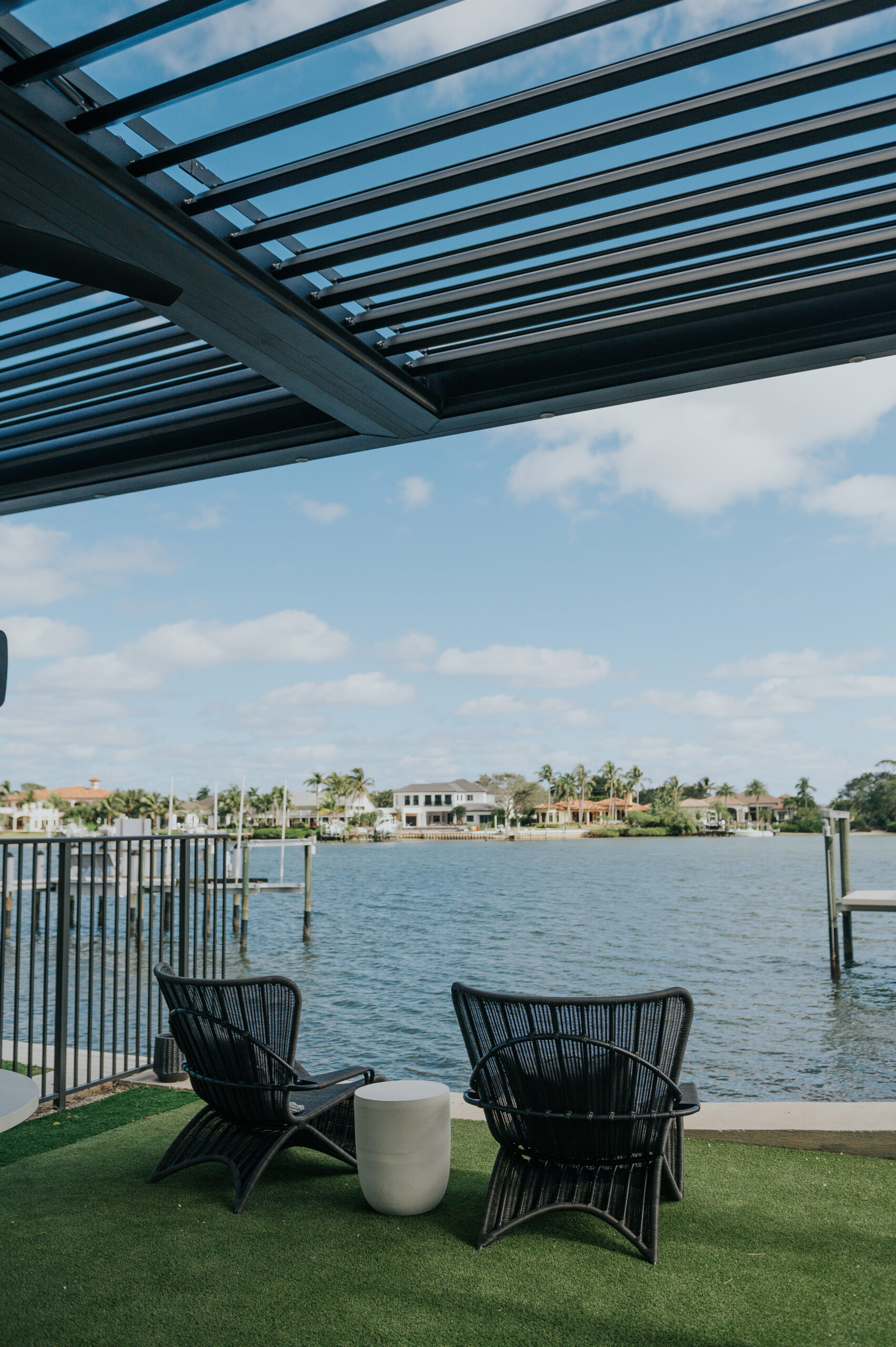
Every summer, South Florida homeowners ask us the same question: “What happens to my pergola when a hurricane comes?” It’s a fair concern. Between June and November, everyone from Jupiter to Port St. Lucie keeps one eye on the tropics, and the last thing you want is a backyard structure that becomes a liability when the wind picks up. The good news is that a properly engineered, properly permitted pergola is designed with exactly this climate in mind. Here’s what you should know before you build — and how to prepare the structure you already have.

Wind Load Isn’t Optional in Florida — It’s the Law
Unlike a pergola kit shipped to a backyard in Ohio, any permanent outdoor structure built in Palm Beach, Martin, or St. Lucie County has to comply with the Florida Building Code, which requires structures to be engineered for the design wind speeds of your specific location. Coastal areas along the Intracoastal and barrier islands generally face stricter requirements than inland neighborhoods, and your local building department will want to see signed and sealed engineering that proves the structure can handle it.
This is why the permitting process matters so much. It isn’t red tape for its own sake — it’s the mechanism that confirms your pergola’s posts, beams, connections, and footings were actually designed for the wind conditions at your address. If a contractor offers to skip the permit to save time, that should be a red flag, not a favor. We covered the permitting process in more detail in our guide to pergola permits in Palm Beach County.
Why Structure and Materials Matter More Than Looks
Two pergolas can look nearly identical in a photo and perform completely differently in a storm. The difference comes down to what’s under the finish:
- Structural aluminum vs. wood. Powder-coated structural aluminum doesn’t rot, warp, or lose fastener grip over time the way wood can in our humidity. A wood pergola that was solid five years ago may have hidden deterioration at exactly the joints that matter most in high wind.
- Engineered connections. In wind events, structures rarely fail in the middle of a beam — they fail at connections. Quality systems use engineered brackets and through-bolted or welded connections rather than surface screws.
- Proper footings and anchoring. A pergola is only as strong as what it’s attached to. Engineering will specify footing sizes and anchor types based on your soil and slab conditions, which is another reason site-specific plans beat generic kits.
The Louvered Roof Advantage: Letting the Wind Through
One of the smartest features of a motorized louvered pergola in a hurricane-prone region is the ability to open the roof. A solid roof panel catches wind like a sail and transfers that force into the frame and footings. Rotating the louvers to the open position lets wind pass through the roof plane instead of loading it, dramatically changing how the structure behaves in a storm.
That’s a real, practical difference from fixed-roof patio covers. When a storm is approaching, opening the louvers takes seconds with a remote or app — no ladders, no panel removal, no scrambling for hardware in the wind.

Your Pre-Storm Checklist for Outdoor Living Spaces
When a watch or warning is issued for our area, a few simple steps protect both your structure and your home:
- Open motorized louvers fully so wind can pass through the roof.
- Retract any motorized screens or shades into their housings — the housing is designed to protect the fabric.
- Bring in or secure furniture, planters, umbrellas, and décor. In a hurricane, loose objects cause far more damage than the structures themselves.
- Shut off and secure outdoor kitchen appliances, and protect them with covers.
- After the storm, walk the structure and look for anything that shifted, then have anything questionable inspected before you rely on it again.
What About Older or DIY Pergolas?
If you inherited a pergola with the house, or installed a big-box kit years ago, hurricane season is the right time to have it evaluated. Look for wobble at the posts, corrosion at brackets and fasteners, cracked footings, or wood that sounds hollow when tapped. An unpermitted or deteriorating structure isn’t just a storm risk — it can complicate insurance claims and home sales as well. Sometimes reinforcement is possible; sometimes replacing it with an engineered aluminum system is the more sensible long-term investment.
Build It Right the First Time
Living in paradise means designing for its weather. The homeowners who enjoy their outdoor spaces most are the ones who never have to wonder whether their pergola was built for a South Florida summer — because the engineering, permitting, and installation were handled correctly from day one.
If you’re planning a new outdoor living space in Palm Beach, Martin, or St. Lucie County — or want an honest opinion on the structure you have — we’re happy to help. Call Jupiter Pergola at (561) 826-9200 or request a consultation and we’ll walk your site with hurricane-smart design in mind.