
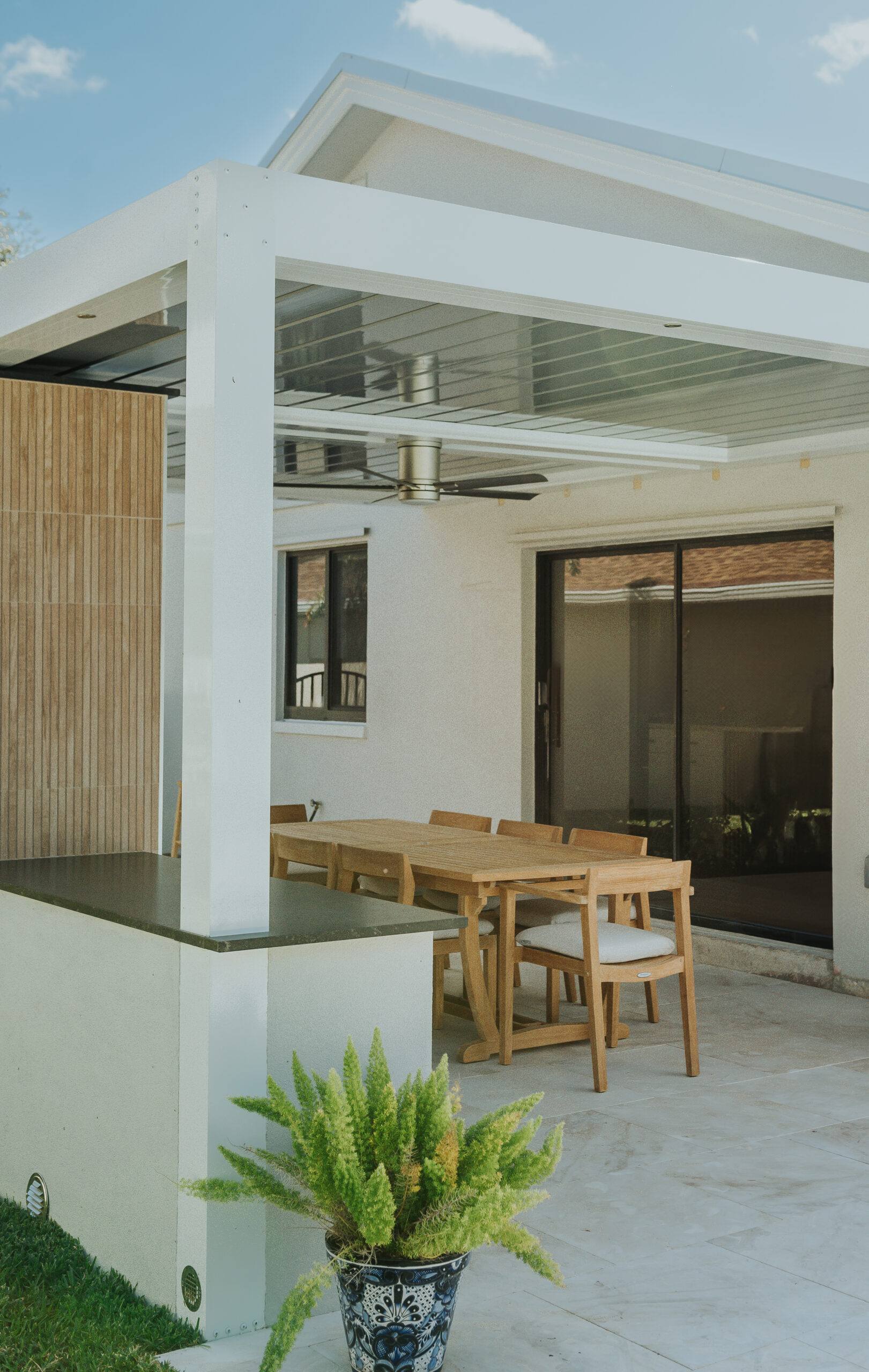
It’s one of the first questions homeowners ask when they start planning a pergola project in South Florida: “Do I actually need a permit for this?” The short answer is yes — in Palm Beach County and nearly every municipality around it, a permanently installed pergola is considered a structure, and structures require permits. But the full answer is more interesting, because the permitting process here is different from almost anywhere else in the country, and understanding why can save you months of frustration and thousands of dollars in avoidable mistakes.

Why South Florida Treats Pergolas Differently
In much of the United States, a backyard pergola is treated like a glorified piece of furniture. Here, it’s treated like a building — and for good reason. Palm Beach, Martin, and St. Lucie Counties sit in one of the most demanding wind zones in the country under the Florida Building Code. Any structure attached to your home or anchored in your yard has to be engineered to resist hurricane-force winds, and inspectors want proof that yours will.
That’s not bureaucratic box-checking. A pergola that isn’t properly anchored doesn’t just fail in a storm — it becomes wind-borne debris that can damage your home, your pool enclosure, or your neighbor’s property. The permitting process exists to make sure the structure shading your patio in July is the same structure still standing in October.
What the Permitting Process Actually Involves
Every jurisdiction has its own quirks — the Town of Jupiter, unincorporated Palm Beach County, Palm Beach Gardens, and Stuart each run their own permitting departments — but the core requirements are similar across the region:
- Sealed engineering drawings. Plans signed and sealed by a Florida-licensed engineer showing the structure meets wind-load requirements for your specific site.
- Product approvals. Manufactured systems like motorized louvered pergolas typically carry Florida Product Approvals or Miami-Dade NOAs documenting how they’ve been tested.
- A site plan. A drawing showing where the pergola sits on your lot, including setbacks from property lines and any easements.
- Anchoring details. How the posts connect to footings, a slab, or your home’s structure — this is what inspectors scrutinize most closely.
Setbacks trip up more homeowners than anything else. Many lots in our area carry utility or drainage easements along the rear property line, and a pergola placed inside one can be rejected outright — even if it’s beautifully engineered. Checking setbacks and easements before you fall in love with a location is one of the smartest first steps you can take.
Don’t Forget the HOA
If you live in a community with a homeowners association — and in Palm Beach County, odds are good you do — the county permit is only half the battle. Most HOAs require architectural review board (ARB) approval before any exterior structure goes up, and they often care about things the county doesn’t: color, materials, height, and visibility from the street or golf course. Smart homeowners run the HOA application and the building permit in parallel rather than one after the other, which can shave weeks off the total timeline.

What Happens If You Skip the Permit?
It’s tempting, especially when a handyman offers to put up a kit pergola over a weekend. But unpermitted structures in South Florida carry real consequences:
- Code enforcement can require you to remove the structure or permit it after the fact — which usually means tearing into finished work for inspections.
- Your homeowner’s insurance may deny claims related to an unpermitted structure, including damage it causes to your home in a storm.
- Unpermitted work routinely surfaces during home sales, where it can delay or derail a closing until it’s resolved.
Permitting done right the first time is dramatically cheaper and faster than fixing it later.
How a Licensed Contractor Makes This Easy
Here’s the good news: when you work with a licensed, insured contractor who builds pergolas in this region every week, the permitting process largely disappears from your to-do list. At Jupiter Pergola, we handle the engineering, the drawings, the product approval documentation, the permit application, and the inspections for every project we build. Our motorized louvered pergolas are engineered specifically for South Florida’s wind requirements, so the approval process is a well-worn path rather than an experiment.
That matters more than most homeowners realize. A contractor who knows the difference between Jupiter’s requirements and Palm Beach Gardens’ requirements — and who has working relationships with the local building departments — can keep a project moving while a DIY applicant is still figuring out which forms to file.
Thinking About a Pergola? Start With a Conversation
Every lot, every municipality, and every HOA is a little different, and the best way to find out what your project will involve is to talk it through with someone who navigates these approvals daily. Call Jupiter Pergola at (561) 826-9200 or request a consultation and we’ll walk you through exactly what permitting looks like for your property — before you spend a dollar on the wrong plan.