
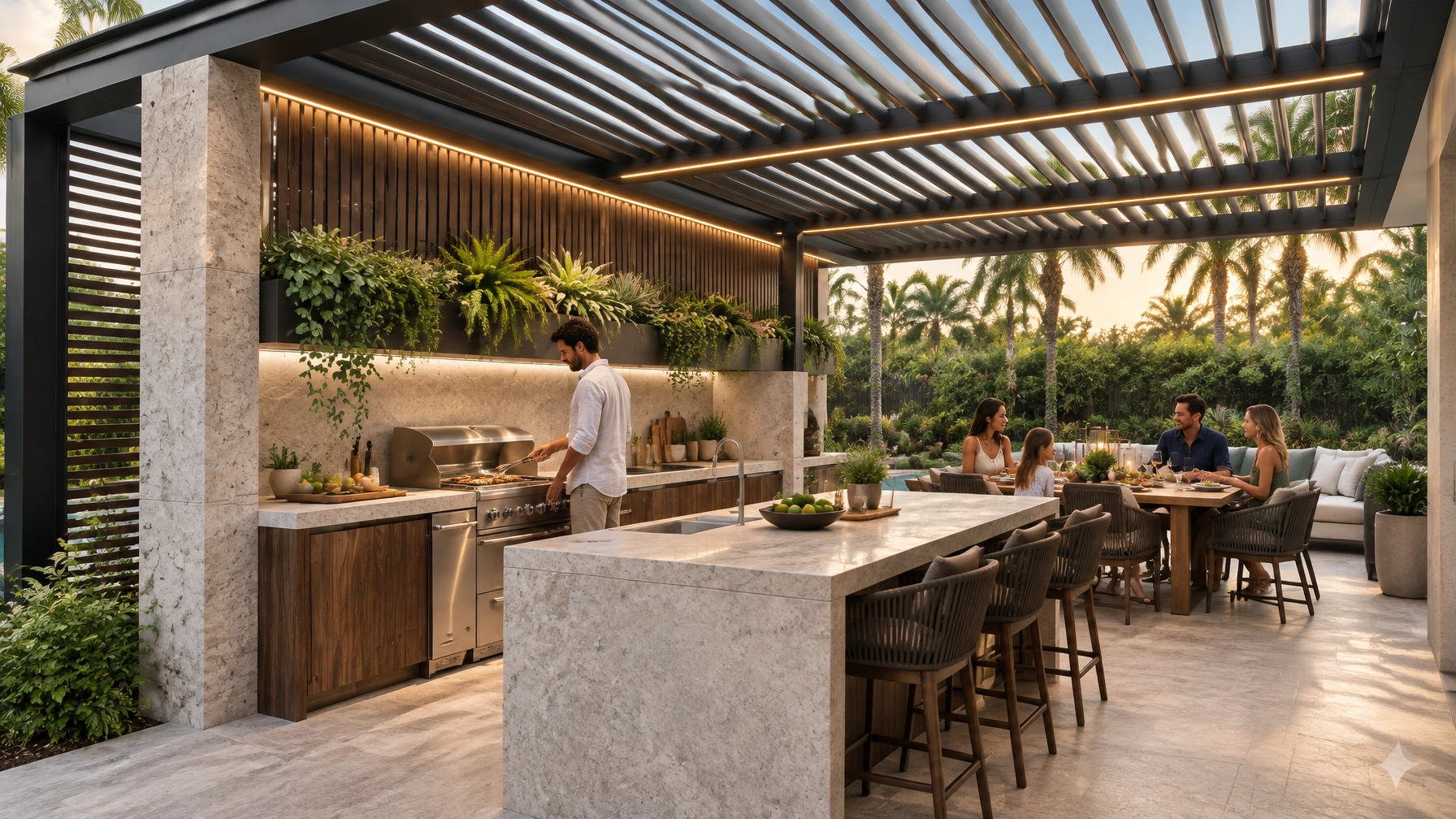
An outdoor kitchen should draw you outside, not leave you watching the afternoon forecast and wondering whether dinner will have to move indoors. In South Florida, intense sun, lingering heat, sudden rain, and seasonal hurricane conditions all shape how comfortably you can cook and entertain.
The most effective outdoor kitchen shade ideas start with more than a cover. They consider where you grill, how heat and smoke move, where guests gather, and how you want the space to feel from daytime lunch through evening dinner. With a thoughtfully designed Motorized Louvered Roof and well-planned Adjustable Screens, an ordinary patio can evolve into one of your home’s most inviting rooms.
What should outdoor kitchen shade actually do?
Shade is only one part of comfort. The right design should help you manage sun over cooking and dining areas, encourage airflow while you grill, and offer overhead coverage when rain arrives. It should also feel connected to your home’s architecture, not like an afterthought.
A basic umbrella can shade a small table, but it may not cover your grill, prep counters, and seating together. A fixed cover provides consistent protection, but it won’t adapt as the sun and weather shift. For many homeowners, flexible coverage makes the difference between a patio that looks beautiful and one that gets used.
The goal is a seamless outdoor room: a place where the cook stays part of the conversation, guests can linger comfortably, and family meals don’t depend on finding a perfect-weather window.
1. Choose a Motorized Louvered Roof for flexible overhead shade
Ready to make the roof work as hard as the kitchen below it? A Motorized Louvered Roof lets you adjust the angle of the roof blades as conditions change. Open the louvers to welcome daylight and airflow. Angle them to soften direct sun. Close them when rain begins to fall.
That adjustability is especially useful over an outdoor kitchen. While you grill, you can open the louvers above the cooking zone to help heat and smoke disperse. At the same time, you can angle the blades over dining or lounge areas for shade. The layout can be tailored to how you cook and host, not simply to a standard product size.
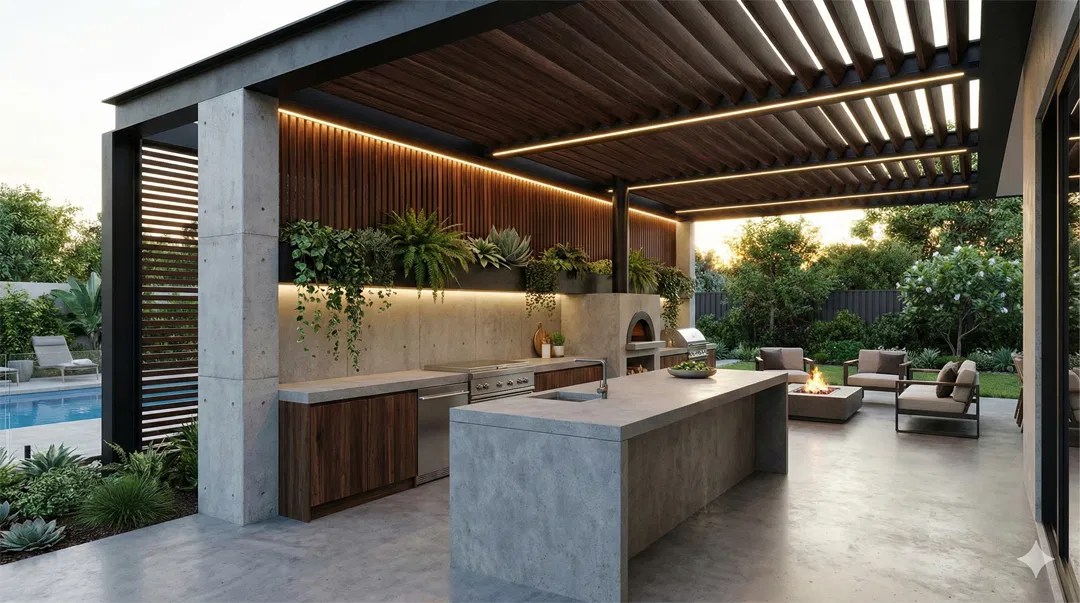
Integrated options such as lighting, fans, and smart controls can make the space feel polished and easy to use after sunset. The details matter: task lighting over prep surfaces, for example, serves a different purpose than softer ambient lighting above the dining table.
2. Add Adjustable Screens where the sun and breeze come from
Overhead shade may not stop low afternoon sun from reaching the side of your dining area. Adjustable Screens give you another layer of control: lower them when glare, insects, or added privacy become a concern, then retract them to open up the view and welcome a breeze.
You don’t necessarily need to screen every side. A screen on the sun-facing side may be enough to make late-afternoon dining more comfortable while keeping other sides open. For a grilling area, plan carefully so screens do not obstruct ventilation or conflict with appliance requirements. A qualified designer can help coordinate the screen locations with your cooking equipment and the way air moves through the patio.
Explore Motorized Retractable Screens to learn how they can complement a custom shade design.
3. Plan cooking, dining, and lounge zones together
Picture your next gathering. Can guests chat with the person at the grill without crowding the prep area? Is there a comfortable spot to set down a drink? Can family move between the kitchen, dining table, and pool without crossing the busiest part of the cook space?
A functional plan often includes three connected zones:
- Cooking: Position the grill, prep counter, and storage for a practical workflow. Keep the cooking area open enough for safe ventilation, and follow appliance manufacturers’ instructions for overhead clearances.
- Dining: Give the table or bar seating dependable shade and comfortable lighting. This is often where guests spend the most time.
- Lounge: Add inviting seating nearby so the kitchen becomes part of the gathering, not a separate station the cook has to leave.
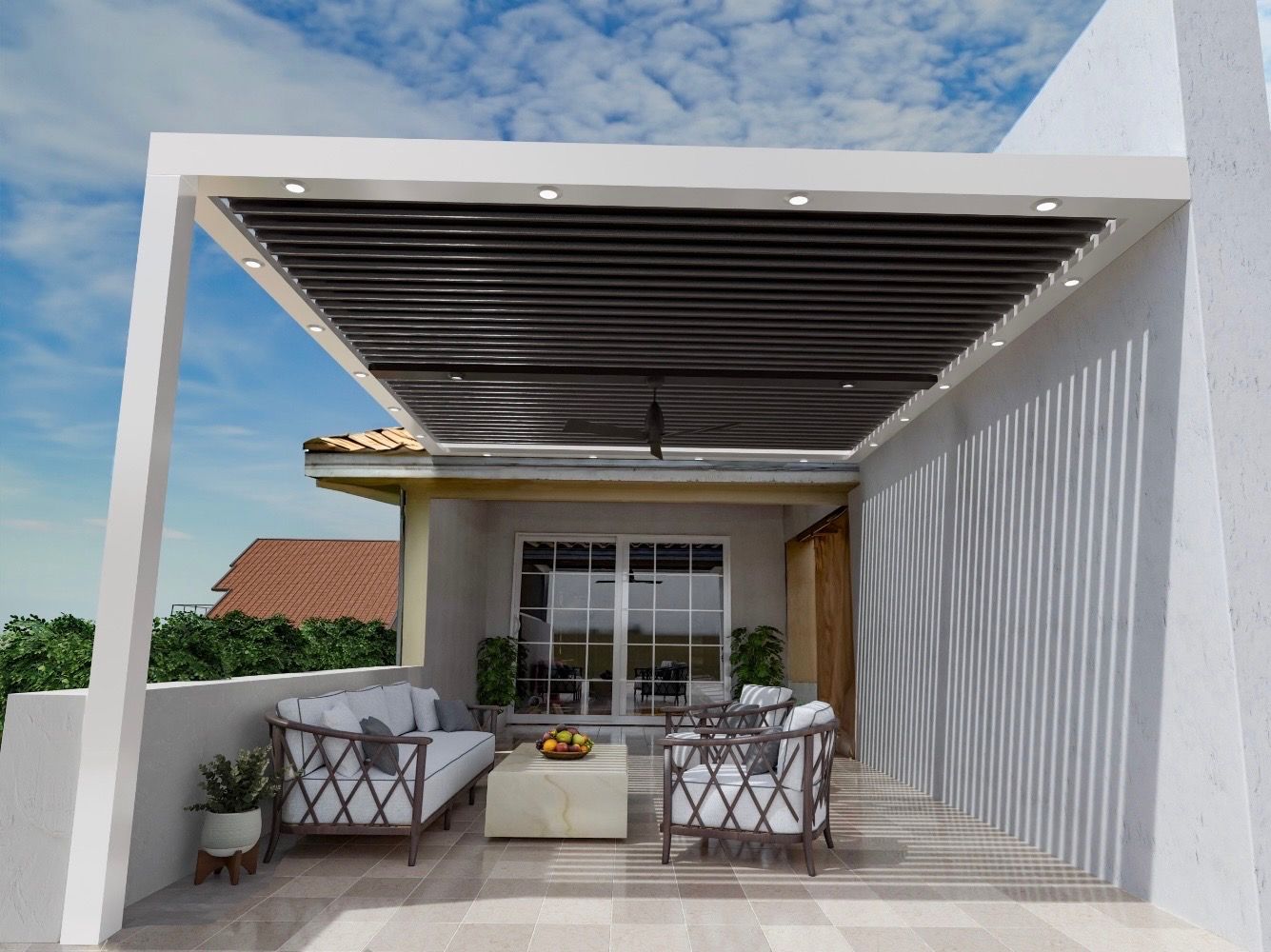
When these zones are designed as one experience, the whole space feels more natural. Guests can move from conversation to dinner, while you cook without feeling separated from the people you invited over.
4. Design for rain, heat, and everyday use
In South Florida, a sudden shower can arrive while the grill is hot and dinner is nearly ready. Closed louvers and integrated drainage can help shed rain and direct water away from the covered area, making the patio more usable through typical showers. But no open-air shade structure can guarantee that wind-driven rain will stay out in every condition.
A louvered system is weather resistant, not a sealed envelope like a house. Water and air may still enter, especially in heavy or wind-driven rain. If you want to better protect cabinetry, appliances, and furnishings, discuss placement, drainage, finishes, covers, and the specific limits of your chosen system during design.
Fans and open louvers can also help the cooking zone feel more comfortable in the heat. Design for airflow, rather than enclosing the grill area in a way that traps heat or smoke. The right solution balances shade with the open-air feel that makes outdoor cooking enjoyable.
5. Look beyond appearance to engineering and installation
Modern Pergola Designs can make an outdoor kitchen feel architectural and refined, but in this climate, the structure behind the finish matters just as much as its appearance. The design should respond to the home, the site, the intended dimensions, and applicable local wind and permitting requirements.
That’s why it’s important to work with reputable, licensed, and insured contractors who understand South Florida conditions. Jupiter Pergola holds both a General Contractor’s license and an Electrical Contractor’s license, which matters when a project includes structural work as well as powered louvers, screens, or lighting.
Our projects are designed, engineered, fabricated, and installed in-house. That end-to-end process helps coordinate the structure, electrical components, drainage, and finish details from concept to completion. Every project should be evaluated for its specific site and built to applicable requirements; no generic product claim should substitute for project-specific engineering. For background, review the Florida Building Code’s wind-load provisions and our guide to hurricane-season pergola considerations.
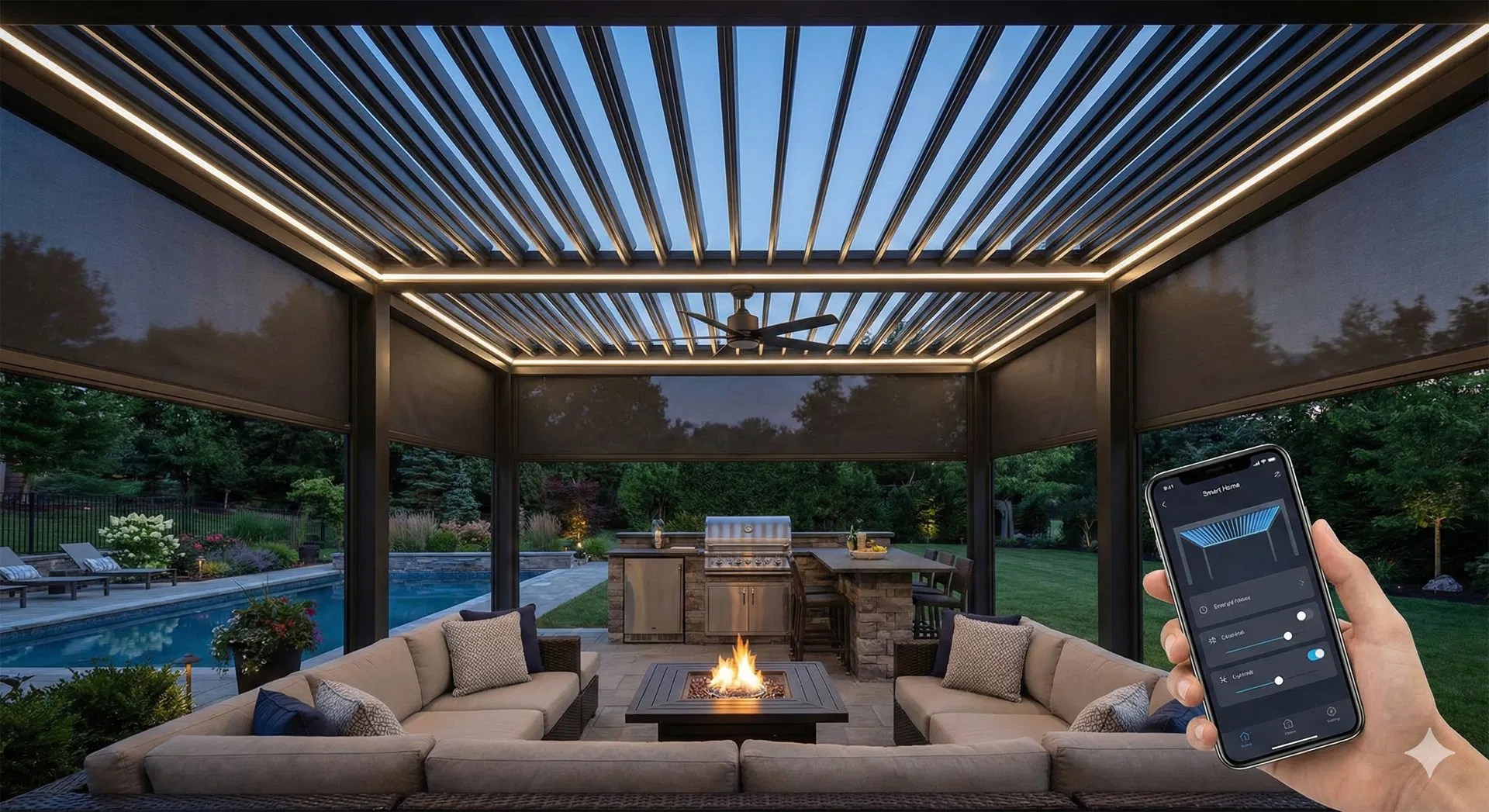
Dream with us: make the patio part of your everyday life
The most successful luxury outdoor living spaces are designed around the moments you want to make possible: dinner with friends, a relaxed weekend lunch, or a family evening that stretches long after the sun goes down. With thoughtful shade, ventilation, and a layout that brings people together, your outdoor kitchen can become more than a place to grill. It can become the heart of your backyard.
At Jupiter Pergola, we help you shape that experience from the first design conversation through installation. Dream with us as we turn an underused patio into a tailored, lifestyle-oriented retreat for enjoying the Florida outdoors throughout the year.
Explore our Outdoor Kitchen Pergola solutions, learn more about working with a licensed and insured contractor, or request a consultation to begin planning your space.