
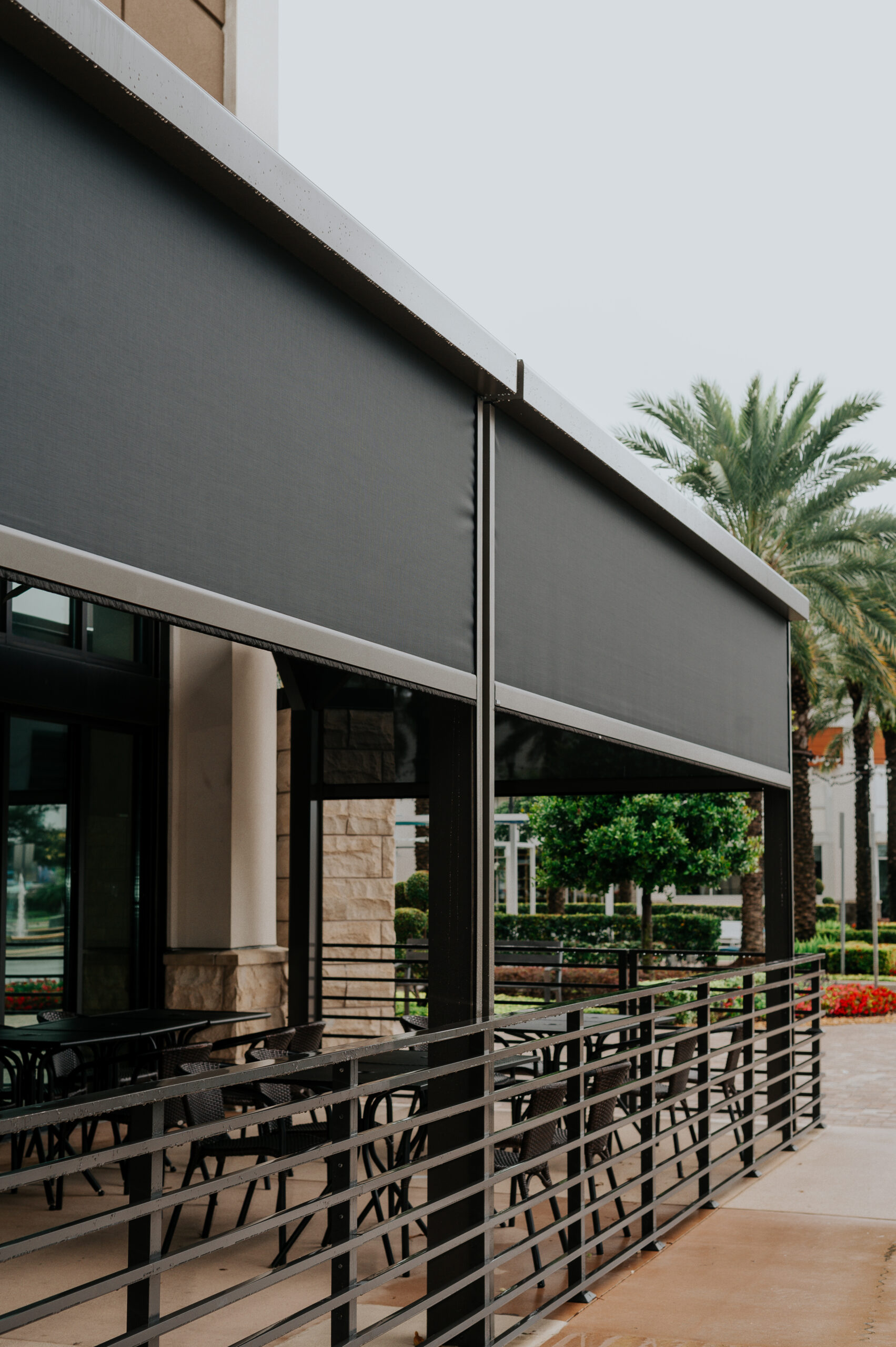
Anyone who has spent an August afternoon on a Jupiter patio knows the routine: the sun swings west and turns your seating area into a glare zone, the no-see-ums show up right at sunset, and a fast-moving storm can send everyone scrambling inside with the throw pillows. A motorized retractable screen solves all three problems with the push of a button, which is why it has become one of the most requested upgrades we install across Palm Beach, Martin, and St. Lucie Counties.

What Is a Motorized Retractable Screen?
A motorized retractable screen is a tensioned fabric or mesh panel housed in a slim cassette mounted along the top of a pergola, patio opening, lanai, or garage bay. At the press of a remote, wall switch, or smartphone app, the screen glides down along side tracks and seals the opening. When you want the open-air feel back, it retracts completely out of sight. Unlike fixed screen walls, nothing about your view or architecture changes when the screen is up.
Screens come in a range of mesh types, each suited to a different job:
- Solar mesh blocks a significant portion of heat and UV while preserving your view, taming the harsh western sun that makes patios unusable in the late afternoon.
- Insect mesh is woven tightly enough to keep out mosquitoes and even no-see-ums, the tiny biting midges that plague coastal South Florida evenings.
- Privacy and blackout fabrics create a secluded cabana feel, useful for outdoor TVs, poolside lounges, or homes with close neighbors.
- Clear vinyl panels keep wind-driven rain out during summer storms so your furniture, kitchen, and electronics stay dry.
Why They Make Sense in South Florida Specifically
Plenty of products marketed nationally were never designed with our climate in mind. Retractable screens, done right, are almost tailor-made for it. Our rainy season runs June through October, and most storms are short, intense, and wind-driven. A screen you can deploy in seconds means a passing downpour no longer ends the evening. On the flip side, our best months, November through April, are exactly when you want everything wide open, and a retractable system disappears completely instead of leaving you looking through mesh all winter.
There is also the heat-management angle. A west-facing covered patio in Jupiter or Palm Beach Gardens can feel like an oven from 3 p.m. onward, even under a solid roof, because low-angle sun pours in from the side. Roofs block overhead sun; screens block the sideways sun that a roof cannot. Pairing a solar screen with a motorized louvered pergola gives you control from every direction: louvers handle the overhead light and rain, screens handle the low sun, wind, and insects.
What About Hurricanes and High Wind?
This is the most common question we get, and it deserves a straight answer. Retractable screens are not hurricane protection, and no reputable installer should tell you otherwise. Their advantage in storm season is the opposite: because they retract fully into their housing, you can put the screen away before a storm arrives, leaving nothing exposed to the wind. That is a meaningful difference from fixed screen enclosures, which routinely need panel replacement after a serious blow. For day-to-day breezes, quality track-guided systems are engineered to stay taut and quiet in the kind of gusty afternoon conditions we see along the coast, and many include wind sensors that retract the screen automatically if conditions exceed its rating.

Where Homeowners Are Installing Them
- Under pergolas and pavilions, to turn an open-air structure into a usable evening room during bug season.
- Across covered lanais and loggias, especially on waterfront lots where wind and afternoon sun come off the Intracoastal.
- Around outdoor kitchens, protecting appliances and cabinetry from wind-driven rain.
- On garage openings, creating a ventilated workshop or gym space without inviting insects in.
Questions to Ask Before You Buy
Not all screen systems are equal, and coastal installations are less forgiving than inland ones. Before committing, ask how the tracks and housing are finished, since salt air is hard on hardware and marine-grade aluminum with a quality powder coat holds up far better near the water. Ask whether the motor is from an established manufacturer with local parts support. Ask how the system handles a power outage, and whether it integrates with the automation you may already have on a louvered roof. Finally, confirm who is doing the installation: a screen is only as good as its tracks, and out-of-plumb tracks cause the jamming and fabric wear that give cheaper systems a bad name.
Permitting is also worth a conversation. Depending on your municipality and how the screen attaches to the structure, a permit may be required, and HOA architectural review often applies in gated communities from Jupiter to Port St. Lucie. A local installer who handles this paperwork routinely will save you weeks of back-and-forth.
Bring the Idea to Life
The best way to evaluate a retractable screen is to think about the last three times you gave up on your patio: too bright, too buggy, or too wet. If any of those sound familiar, a motorized screen likely pays for itself in evenings you actually get to enjoy. Jupiter Pergola designs and installs motorized screens as standalone upgrades or as part of complete outdoor living projects across Palm Beach, Martin, and St. Lucie Counties. Call us at (561) 826-9200 or request a consultation and we will help you match the right mesh, mounting, and automation to how you actually use your space.