
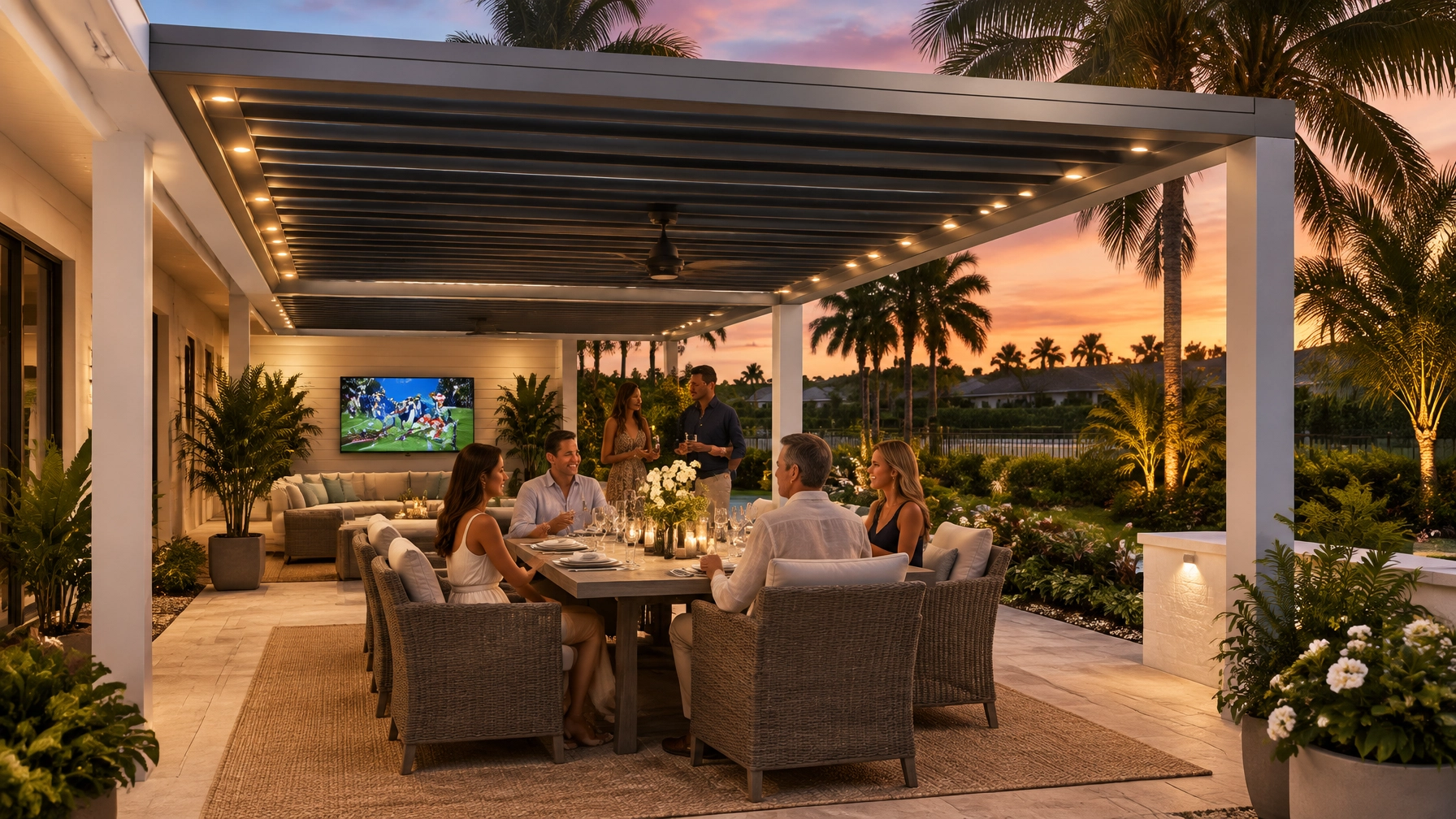
When you are searching for backyard shade ideas, a retractable awning can seem like the obvious lower-cost choice. It offers quick relief from the sun, takes up little space, and may fit a smaller patio beautifully.
But South Florida outdoor living demands more than occasional shade.
Intense UV exposure, heavy afternoon rain, high humidity, coastal air, and hurricane-season winds all place extraordinary demands on an outdoor structure. If you want to transform an underused patio into a true setting for family time, gamedays, dinner parties, and holiday entertaining, the comparison becomes less about price and more about performance.
So, which is better: a retractable awning or a Motorized Louvered Roof?
For occasional shade beside a door or small deck, an awning can be perfectly suitable. For a year-round, lifestyle-oriented outdoor room, a custom-engineered louvered roof is typically the more complete solution.
Shade Coverage: Simple Canopy or Complete Outdoor Room?
A retractable awning primarily shades the area directly beneath its fabric canopy. When extended, it blocks overhead sunlight. When retracted, the patio is fully exposed again.
That simple open-or-closed operation works well for a narrow seating area, balcony, or wall-side patio. It is one of the more accessible backyard shade ideas for homeowners who need limited coverage.
A Motorized Louvered Roof offers a more sophisticated level of control. Its rotating aluminum louvers can open fully for sunshine and airflow, angle to reduce glare and heat, or close to create a shaded, rain-shedding roof. You can respond to changing conditions without moving furniture, taking down accessories, or abandoning the space.
This is where modern pergola designs have evolved. The roof is no longer just decorative. It becomes an active part of your outdoor environment.
Picture breakfast beneath open louvers, a shaded afternoon by the pool, and an evening dinner beneath integrated lighting. One structure supports each moment seamlessly.
Wind and Hurricane Performance in South Florida
This is one of the most important differences between the two systems.
A retractable awning is designed to be retracted when strong winds approach. Even premium fabrics and frames are not intended to serve as a permanent storm-resistant roof. Wind sensors can automatically roll the canopy back, but that means the shade disappears precisely when conditions become more challenging.
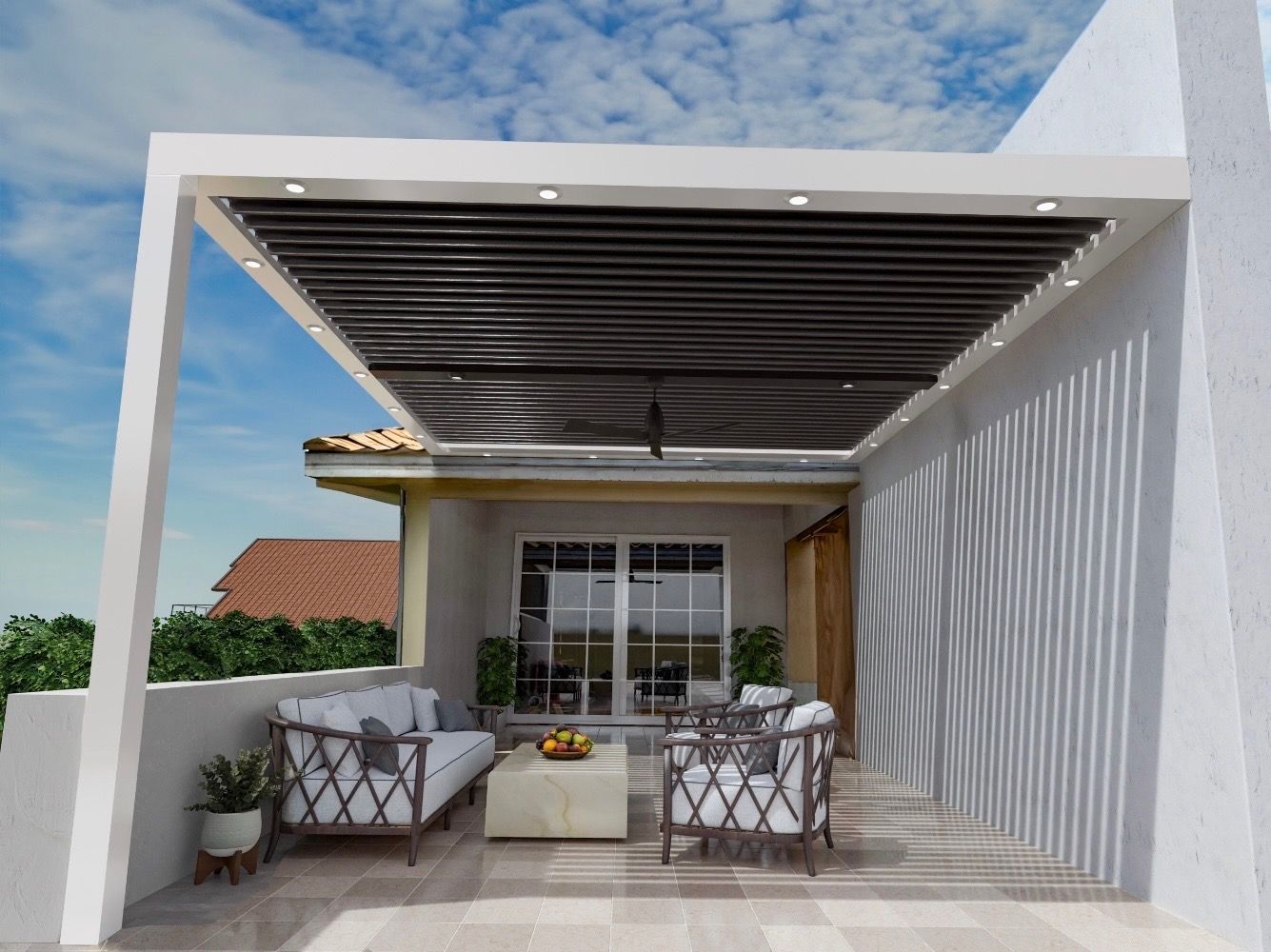
A louvered roof is a permanent, engineered structure. At Jupiter Pergola, each project is designed for the wind zone and site conditions at your address, then permitted according to applicable Florida requirements. The aluminum frame, connections, anchorage, and louvers are selected as part of a complete structural system, not as an off-the-shelf canopy.
Our hurricane-rated systems use heavy-duty extruded aluminum, stainless hardware, and sealed engineering for the project. They are built to withstand intense South Florida weather conditions, including the demanding conditions associated with hurricane season.
That does not mean any patio structure should be ignored during an extreme storm. You should always follow the manufacturer’s storm-preparation instructions and local emergency guidance. However, the fundamental distinction remains clear: an awning is designed to retreat from severe weather, while an engineered louvered roof is designed as a permanent architectural element.
Rain Shedding: Light Protection Versus Year-Round Use
South Florida rain rarely arrives politely. A short afternoon shower can become a wind-driven downpour within minutes.
A retractable awning may provide some protection during light rain when properly pitched. However, rain can blow beneath the fabric, collect at the edge, or cause pooling if the canopy is not positioned correctly. Most awnings should be retracted during heavier conditions.
A quality louvered roof closes its overlapping aluminum panels to create a rain-shedding surface. Integrated gutters and downspouts direct water away from the living area, helping you stay comfortable through normal passing storms.
The honest disclaimer is important: these structures are not sealed envelopes like a house. Wind-driven rain, misting, splashing, or occasional drips can occur during the most severe conditions. If your goal is a completely enclosed, climate-controlled room, you may need additional solutions such as motorized screens or sliding glass walls.
Still, for everyday Florida living, a louvered roof provides a significantly more capable and weather-resistant patio solution.
Fabric Versus Powder-Coated Aluminum
The material difference affects appearance, maintenance, lifespan, and long-term value.
Retractable awnings use fabric stretched over an aluminum support frame. Modern solution-dyed acrylic fabrics can offer strong UV resistance and attractive color options, but fabric remains a consumable material. Under constant Florida sun, humidity, wind, and rain, it can fade, stretch, stain, mildew, or weaken.
Depending on fabric quality and exposure, replacement may be necessary within several years to roughly a decade. That means the initial awning price does not represent the entire ownership cost. Over time, you may pay for cleaning, repairs, motor service, and replacement fabric.
A louvered roof is built primarily from powder-coated aluminum. It does not rot, warp, or mildew like fabric, and it is well suited to humid and coastal environments. The finish provides a refined architectural appearance while reducing the need for ongoing upkeep.
Routine maintenance generally includes rinsing the structure, checking the louvers, and keeping gutters and drainage paths clear. There is no fabric canopy to remove, re-tension, or replace every few years.
For homeowners comparing custom patio covers, this is a meaningful distinction: one option includes a recurring soft-goods replacement cycle, while the other is an engineered structure intended to serve for decades.
Motorized Screens, Lighting, and Outdoor Living Features
Ready to create more than shade?
A retractable awning can include options such as motorization, wind sensors, and limited LED lighting. However, its wall-mounted frame is not usually designed to become the foundation for a complete outdoor room.
A louvered roof provides a stronger architectural framework for integrating:
- Motorized patio screens for privacy, insects, low-angle sun, and wind
- LED lighting for evening entertaining
- Ceiling fans for airflow
- Outdoor kitchens and dining areas
- TVs and audiovisual systems
- Privacy walls and architectural accents
- Smart controls and environmental sensors
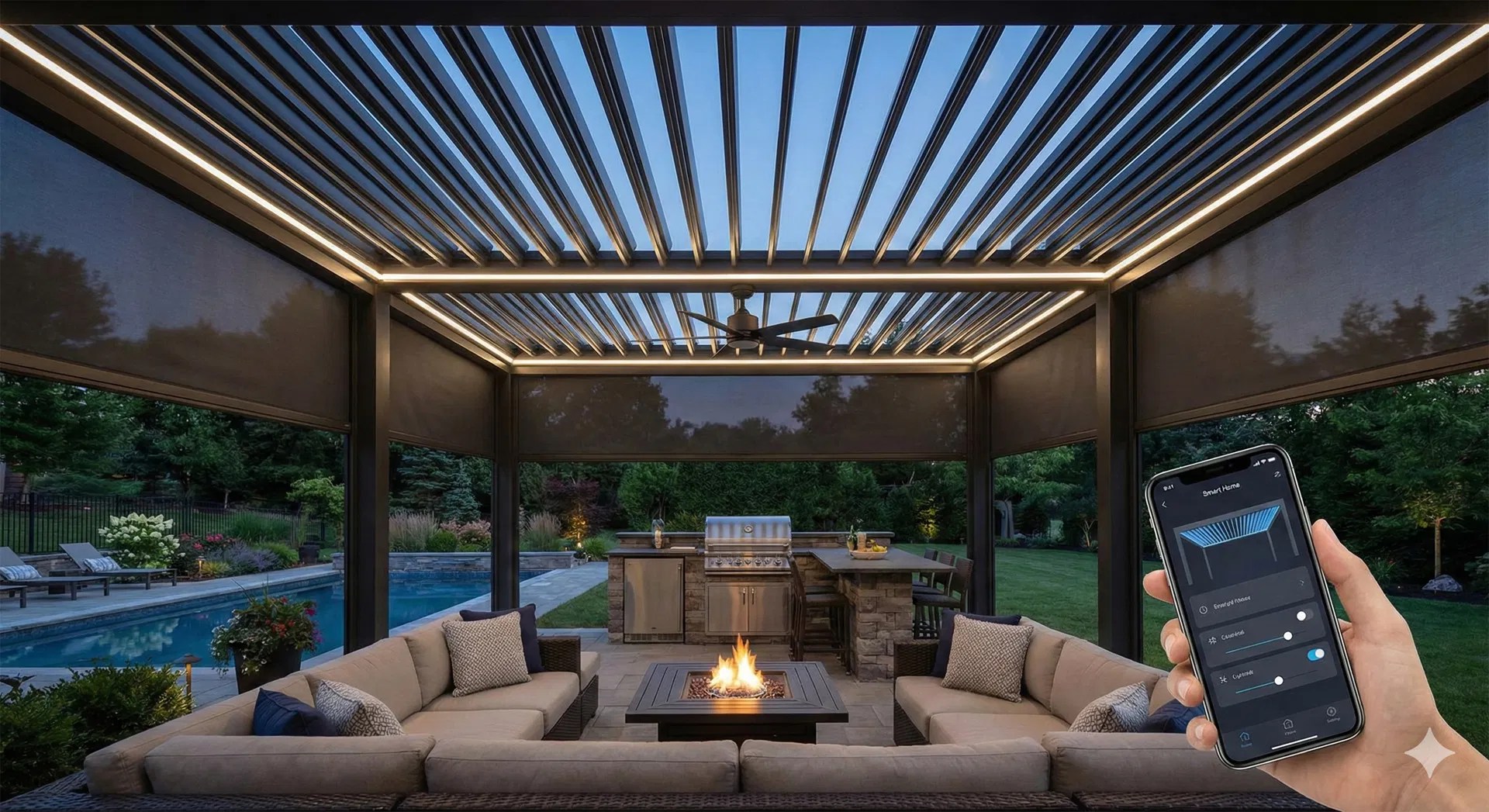
With screens lowered, you can enjoy a more comfortable setting for a fall dinner party or gameday gathering. With the louvers adjusted and the lighting set, the same space can feel open and bright in the afternoon, then intimate and luxurious after sunset.
This is the difference between adding shade and designing a lifestyle-oriented retreat.
Lifespan, Maintenance, and Long-Term Cost
A retractable awning usually has a lower upfront cost. That can make sense when you need a small amount of occasional shade and have no plans to use the patio as an extension of your home.
But compare the entire ownership experience.
With an awning, you should account for:
- Fabric cleaning and mildew prevention
- Motor and arm maintenance
- Wind-related wear
- Fabric fading and stretching
- Replacement fabric every few years to approximately a decade, depending on conditions
- Retraction before significant storms
With a louvered roof, your long-term responsibilities are generally simpler:
- Rinse aluminum surfaces periodically
- Keep gutters and downspouts free of debris
- Inspect controls, motors, and screens as recommended
- Follow storm-preparation instructions
The louvered roof is a larger initial investment, but it delivers shade control, rain shedding, structural permanence, and a platform for additional features. As a result, many homeowners view it as a one-time investment in usable outdoor living rather than a temporary shade purchase.
For current planning guidance, see our motorized louvered pergola cost guide.
Resale Value and Curb Appeal
A fabric awning can be practical, but it may appear temporary or visually limited when compared with a carefully designed architectural structure.
A custom louvered roof can elevate the entire backyard. Clean lines, coordinated finishes, integrated lighting, and thoughtful landscaping create a polished transition between the home and the outdoors. The result is a more functional entertaining area and a stronger visual impression for future buyers.
It can also help a property stand apart in a competitive market. Buyers increasingly look for outdoor spaces that are ready for dining, relaxing, working, and hosting, not simply a patio with a table and umbrella.
Explore examples of completed Jupiter Pergola projects in our gallery.
Which Option Is Right for You?
Choose a retractable awning if you need:
- Occasional shade for a small patio or deck
- A lower initial investment
- A simple wall-side installation
- A solution you are comfortable retracting before wind and storms
- Fabric maintenance and eventual replacement
Choose a Motorized Louvered Roof if you want:
- Adjustable shade from open sun to full overhead coverage
- Better rain shedding during ordinary South Florida showers
- A permanent, engineered outdoor structure
- Integration with motorized screens, lighting, fans, and outdoor kitchens
- A more durable alternative to repeatedly replacing fabric
- A year-round setting for entertaining and family time
- A bold upgrade that improves comfort, function, and curb appeal
At Jupiter Pergola, every project is designed, engineered, fabricated, and installed in-house. We manage the experience from the first concept through permitting, fabrication, electrical work, and final installation. We hold both Florida General Contractor and Electrical Contractor licenses: CGC1530171 and EC13012123.
That matters when your outdoor structure must perform in a demanding climate. You want a reputable, licensed, and insured contractor who understands local wind conditions, permitting, electrical requirements, and the realities of South Florida construction.
Dream with us. Transform an ordinary backyard into a serene, luxurious retreat made for dinner parties, family conversations, holiday gatherings, and unforgettable Florida evenings.
Request a consultation with Jupiter Pergola to discuss your space, your goals, and the custom patio cover that fits your lifestyle.
Frequently Asked Questions
Is a retractable awning cheaper than a louvered roof?
Usually, yes, at the beginning. However, an awning may require fabric replacement and more frequent weather-related maintenance. A louvered roof costs more upfront but is a longer-term engineered structure with broader functionality.
Can a louvered roof keep my patio completely dry?
No outdoor louvered system is a sealed envelope like a house. A closed roof is designed to shed the vast majority of normal rain through overlapping louvers and integrated gutters, but severe wind-driven rain can still cause misting, splashing, or occasional drips.
Are louvered roofs suitable for hurricane-prone areas?
They can be, when properly designed, engineered, permitted, anchored, and installed for the specific property and wind zone. Ask for sealed engineering and work with a licensed contractor familiar with South Florida requirements.
How long does an aluminum louvered roof last?
A properly engineered and maintained aluminum system is designed to last for decades. Its powder-coated finish and aluminum construction eliminate the recurring fabric replacement associated with many retractable awnings.
Can I add screens and lighting later?
Possibly, depending on the structure and electrical planning. It is best to discuss motorized screens, LED lighting, fans, and other features during the design stage so the frame and wiring can be integrated cleanly from the beginning.