
When homeowners in Jupiter, Palm Beach Gardens, and Stuart start planning a pergola, the first big decision usually isn’t about color or size — it’s about placement. Should the structure attach directly to your home, extending your living space right off the back door? Or should it stand on its own, out by the pool or tucked into a corner of the yard? Both approaches can look stunning, but they behave differently in South Florida’s climate, and the right answer depends on how you actually plan to use the space.

What’s the Difference?
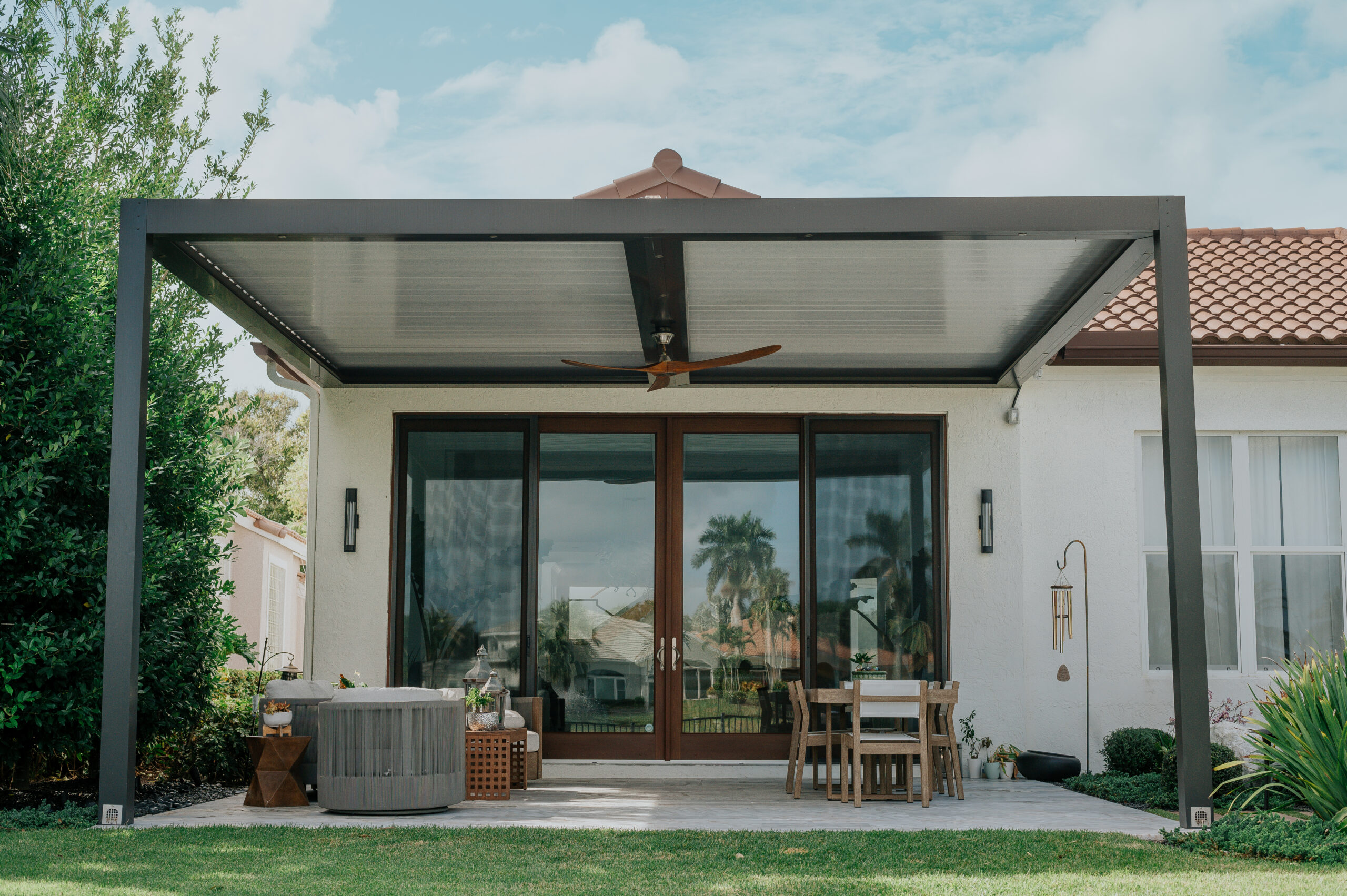
An attached pergola connects to your home along one side, typically over an existing patio or lanai. The house carries part of the structure, and the pergola effectively becomes an extension of your interior rooms. A freestanding pergola is fully self-supporting on its own columns and footings, so it can go almost anywhere on your property — beside the pool, over an outdoor kitchen, or as a destination seating area away from the house.
The Case for an Attached Pergola
Attached pergolas shine when your goal is seamless indoor-outdoor living. Open the sliders, step out under cover, and your patio becomes a true second living room. Because the structure meets the house, you stay dry moving between the kitchen and the grill during one of our famous summer downpours — especially if you choose a motorized louvered pergola that closes tight at the press of a button.
There are practical advantages, too. Running electrical for ceiling fans, lighting, and speakers is usually simpler when the structure is adjacent to the home, and an attached design often makes efficient use of a patio footprint you already have. The main considerations are roofline height and drainage: the pergola needs to tie in below or alongside your existing eaves, and water coming off the structure has to be directed away from the house. A good design and installation team plans both from the start.
The Case for a Freestanding Pergola
A freestanding pergola gives you complete freedom of placement. Poolside cabanas, sunset-facing lounges, and outdoor kitchens set away from the home all call for a structure that doesn’t depend on your roofline. Freestanding designs also let you orient the louvers or shade elements to the sun’s path rather than to the house, which can make a real difference for west-facing yards that bake in the afternoon.
Design-wise, a freestanding pergola reads as an architectural feature in its own right. Many of our clients treat it as the anchor of the backyard — the place the whole landscape plan is built around. The trade-offs are that you’ll need four (or more) columns instead of two, footings at every post, and a plan for trenching power out to the structure if you want fans, lighting, or motorized screens.

Wind and Hurricane Considerations
In Palm Beach, Martin, and St. Lucie Counties, any pergola — attached or freestanding — should be engineered for our wind conditions and anchored accordingly. Attached structures transfer some load to the home, so the connection detail matters; freestanding structures rely entirely on their columns and footings. This is one of the biggest reasons to work with a local company that designs for Florida rather than ordering a generic kit online. Modern aluminum louvered systems are engineered with our climate in mind, and the louvers can be positioned to manage wind and shed rain rather than fight it.
Permitting and HOA Notes
Both attached and freestanding pergolas typically require permits in our area, and attached structures often get extra scrutiny because they tie into the home. Setback rules can also influence where a freestanding pergola may sit on your lot, and many communities require HOA or architectural review board approval before anything is built. None of this should scare you off — it’s routine when your installer handles engineering drawings and permitting as part of the project, as we do on pergola projects throughout Palm Beach County.
Which One Is Right for You?
A few questions usually settle the decision quickly:
- Do you want covered access directly from your kitchen or living room? Lean attached.
- Is the pool or a far corner of the yard the real destination? Lean freestanding.
- Which direction does the harsh afternoon sun come from, and can an attached structure actually block it?
- Where is your electrical panel, and how far would power need to travel?
- Does your lot’s shape or setback leave room for a freestanding footprint?
Plenty of homeowners ultimately do both — an attached louvered roof over the main patio and a freestanding cabana by the pool — but starting with the structure that matches your daily routine almost always delivers the most enjoyment per square foot.
Talk Through Your Options With a Local Design Team
The best way to decide is to walk the yard with someone who designs and installs these structures every day. Jupiter Pergola serves homeowners across Palm Beach, Martin, and St. Lucie Counties with custom attached and freestanding pergolas built for South Florida living. Call us at (561) 826-9200 or request a consultation and we’ll help you find the layout that fits your home, your lot, and the way you love to live outside.