
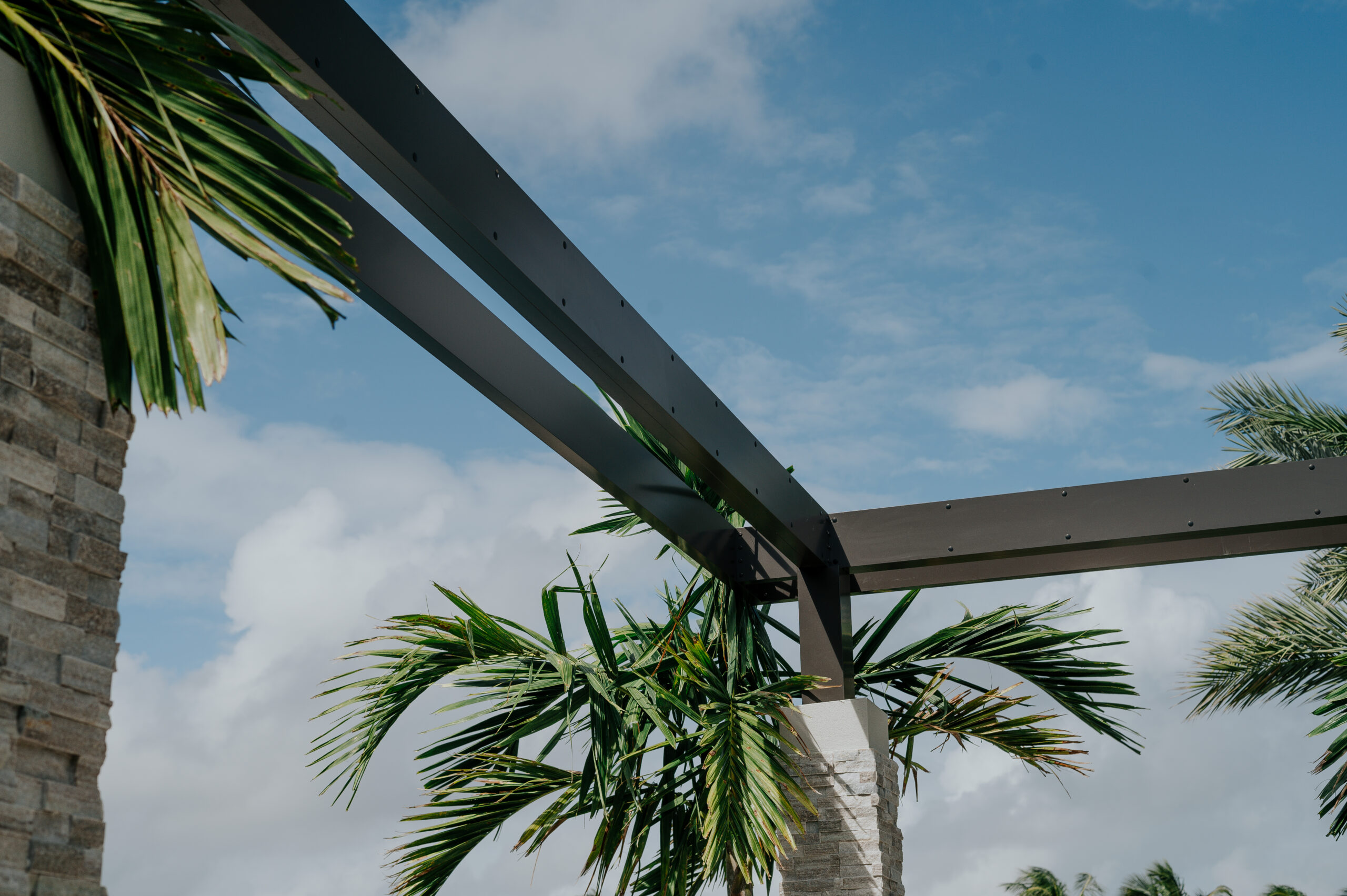
Living near the water is the reason most of us are in South Florida in the first place. But anyone with a home in Jupiter, Juno Beach, Tequesta, or along the Treasure Coast knows the trade-off: salt air is relentless. It corrodes grills, pits patio furniture, and shortens the life of almost anything left outside. So when homeowners invest in an aluminum pergola or motorized louvered roof, one of the first questions we hear is, “How do I keep this looking new?”

The good news is that a quality aluminum structure is one of the most coastal-friendly things you can put in your backyard. With a simple care routine, it will outlast wood by decades. Here is what actually matters when it comes to maintaining an aluminum pergola in a salt-air environment.
Why Aluminum Wins Near the Coast
Unlike steel, aluminum does not rust. When exposed to air, it forms a thin oxide layer that protects the metal underneath. Add a powder-coated finish, and you have a surface engineered to shrug off humidity, UV exposure, and salt spray far better than wood, which warps, rots, and demands re-staining, or untreated steel, which corrodes quickly this close to the ocean.
That said, “corrosion-resistant” does not mean “maintenance-free.” Salt crystals that settle on a powder-coated surface and sit there for months can slowly break down the finish, especially in crevices, around fasteners, and on hardware. The goal of coastal maintenance is simple: do not let salt accumulate.
The Rinse Is 90 Percent of the Job
The single most effective thing you can do for a coastal pergola is also the easiest: rinse it with fresh water from a garden hose. A gentle rinse washes away salt deposits before they have a chance to etch the finish. If your home sits directly on the water or within a few blocks of the beach, aim for a rinse every few weeks. Further inland, once a month or so is usually plenty. After a tropical system or a stretch of strong onshore winds, give it an extra rinse — storms carry a surprising amount of salt well inland.
A Simple Seasonal Cleaning Routine
A few times a year, go one step beyond the rinse:
- Wash with mild soap and water. A bucket of warm water with a small amount of mild dish soap and a soft cloth or sponge is all a powder-coated frame needs. Work top to bottom, then rinse thoroughly.
- Skip harsh chemicals and abrasives. Bleach, solvents, scouring pads, and stiff brushes can dull or scratch the finish. If you use a pressure washer, keep it on a low setting and hold the wand well back from the surface.
- Clear the gutters and channels. Motorized louvered roofs are designed to channel rainwater through integrated gutters and downspouts. In South Florida, leaves, palm debris, and roofing grit find their way in. Clearing these channels keeps water draining the way the system was engineered to.
- Look over hardware and moving parts. Glance at fasteners, brackets, and pivot points while you clean. If anything looks discolored or feels loose, it is far easier to address early.
- Run the louvers through a full cycle. If you have a motorized system, open and close the louvers fully during your cleaning. It is the easiest way to confirm everything is operating smoothly and quietly.

Don’t Forget Screens and Glass
If your outdoor living space includes motorized retractable screens or frameless sliding glass enclosures, they benefit from the same salt-conscious habits. Rinse screen mesh gently rather than scrubbing it, and clean glass panels and their tracks so rollers keep gliding the way they should. Salt buildup in a track is one of the most common reasons sliding systems start to feel stiff — and one of the most preventable.
What About the Motor and Electronics?
Quality motorized louvered systems are built with sealed motors and weather-rated components designed for exactly this climate. There is nothing for a homeowner to lubricate or service inside the motor housing — and you should not open it. Your job is simply to keep debris out of the moving parts and let the system do its thing. If you ever notice new noises, hesitation, or louvers that do not close evenly, that is the time to call your installer rather than experiment.
Buy Once, Buy Right
Maintenance only goes as far as the product underneath it. Marine-grade construction, quality powder coating, stainless or coated hardware, and engineering that meets South Florida’s wind requirements all determine how a structure holds up ten years from now. A motorized louvered pergola built for this environment — and installed by a team that works in it every day — will reward a simple rinse-and-wash routine with decades of service.
Enjoy the Coast Without Worrying About It
Salt air comes with the territory, but it should never keep you from enjoying your backyard. At Jupiter Pergola, we design and install aluminum pergolas, motorized louvered roofs, screens, and glass enclosures built specifically for coastal South Florida living — from Palm Beach County up through Martin and St. Lucie Counties. If you are planning a new outdoor living space or want a structure that can truly handle life near the water, call us at (561) 826-9200 or request a consultation today.